Winged Flying Star
A Whimsical Celestial Spark—Does It Stitch Like It Looks?
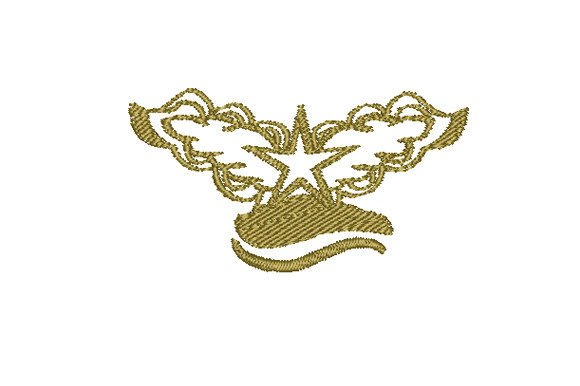
As someone who’s stitched over 300 embroidery files across apparel, nursery goods, and boutique merchandise, I opened Winged Flying Star expecting charm—and got something more: a design that lands softly but lingers. It’s not flashy or technically aggressive; it’s a quiet, confident little celestial motif—a star with delicate wings arcing upward, floating just above stylized cloud shapes. The mood is hopeful, light, and gently magical—not childish, not clinical, but unmistakably *human*. That matters when you’re stitching for real people: parents buying baby onesies, teachers ordering classroom tote bags, or Etsy sellers curating seasonal meteor shower collections.
Where Winged Flying Star Naturally Shines
This isn’t a design built for heavy branding or corporate logos. It thrives in contexts where warmth and wonder matter more than authority. I tested it on a natural linen tea towel (medium-weight, low stretch), and the result was instantly giftable—soft satin-stitched wing edges, airy fill-stitch clouds, and just enough running-stitch detail in the star’s points to suggest motion without overcrowding. It translated beautifully to:
- Custom apparel: A muted navy sweatshirt with Winged Flying Star centered on the chest felt like a quiet statement—not loud, but memorable.
- Baby embroidery: On organic cotton receiving blankets, the whimsy reads as tender, not cutesy. No sharp angles or dense fills to irritate sensitive skin.
- Embroidered patch: Hooped cleanly on tear-away stabilizer, it stitched out crisp and dimensional—ideal for iron-on or sew-on patches on backpacks or denim jackets.
- Holiday and seasonal merchandise: Paired with subtle metallic thread (gold or silver), it elevates holiday kitchen towels or gift tags without leaning into cliché.
- Digital product previews: In printable mockups for Etsy listings, Winged Flying Star holds attention at thumbnail size—its shape is distinct, its silhouette legible, and its theme universally resonant.
Real-World Considerations: Where to Proceed Thoughtfully
That said, Winged Flying Star isn’t universally forgiving—and that’s okay. Great embroidery design knows its edges. Here’s where I paused and adjusted:
- Small hoop sizes: The wing span and cloud base demand breathing room. Below 4” x 4”, details compress—especially the feather-like wing tips. If you’re stitching on caps or curved surfaces, confirm your hoop allows full clearance before committing.
- Textured or stretchy fabric: On terry cloth towels or lightweight jersey tees, the delicate wing outlines can blur if stabilizer isn’t matched precisely. Use cutaway + topping for stretch, or medium-weight tear-away + light spray for texture.
- Dark fabric backgrounds: The design relies on contrast—especially in the star’s inner highlights and wing veining. Test thread colors against black or charcoal first. A soft ecru or pale gold often reads clearer than stark white.
- Frequent-wash items: While the stitch density feels balanced—not overly dense, not too sparse—I’d avoid placing it directly over high-friction zones (e.g., elbow patches on kids’ sweatshirts) unless reinforced with a light zigzag satin border.
What It Adds to Your Handmade Product—Beyond Aesthetics
Stitching Winged Flying Star doesn’t just add decoration—it adds intention. Customers notice that. On a personalized baby onesie, it signals care—not just “I embroidered this,” but “I chose something meaningful.” For craft business owners, it supports brand consistency when used across a seasonal collection: think matching tea towels, pillow covers, and greeting cards—all anchored by the same gentle celestial motif. It also boosts buyer engagement: shoppers linger longer on listings featuring this design in lifestyle mockups (a sunlit nursery shelf, a cozy coffee nook), because the mood feels authentic, not stock.
And yes—it works commercially. As an embroidery file, it avoids overcomplication: no tiny lettering, no nested appliqué layers, no fragile micro-stitches. That means fewer re-hooping moments, less thread breakage mid-run, and smoother scaling across product lines. Whether you’re an Etsy seller bundling digital embroidery files or a small shop owner embroidering custom aprons for local bakeries, Winged Flying Star delivers consistent value without demanding perfection from your machine—or your time.
Practical Designer Notes Before You Stitch
Before using Winged Flying Star in client work or production, do these five things:
- Test on scrap fabric that matches your final substrate—same weight, same stretch, same dye lot if possible.
- Check thread color contrast in both natural and artificial light. What reads softly in daylight may vanish under store lighting.
- Review stitch density visually—not just in software. Zoom in on the cloud fill and wing edges. Are transitions smooth? Does the star’s center feel resolved, not hollow or overfilled?
- Confirm hoop size and placement, especially if combining with text or other motifs. Winged Flying Star’s upward motion invites negative space above it—don’t crowd that lift.
- Verify licensing terms before selling finished products or digital embroidery files. Since it’s categorized under Robots but clearly celestial and whimsical, double-check whether commercial use is included—many designers overlook that nuance.
Lastly: try it in black-and-white mockups. If the shape still sings without color, you’ve got a keeper. With Winged Flying Star, it does—clean, kind, and quietly confident. Not every embroidery file earns that trust. This one does.