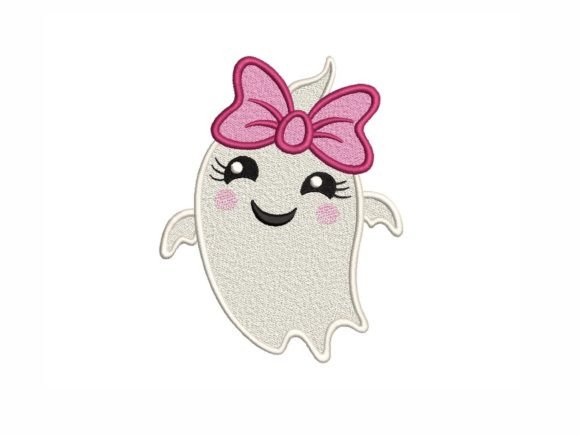
Baby Ghost: A Craft Fair-Ready Halloween Embroidery Design
First Impression: Cute Spooky, Not Scary—Exactly What Buyers Crave
As an embroidery designer who’s prepped over 200 craft fair booths—from Portland bazaars to Nashville holiday markets—I know instantly when a design has “table appeal.” Baby Ghost lands right in that sweet spot: soft-spooky, undeniably cute, and instantly legible at three paces. It doesn’t lean into gothic horror or cartoonish exaggeration—it’s gentle Halloween. Think farmhouse charm meets playful seasonal energy. That’s gold for handmade markets where shoppers want festive *feeling*, not fright.
Where Baby Ghost Shines on Real Craft Fair Products
This isn’t just another digital embroidery file—it’s a versatile, booth-ready asset. Here’s how it performs across your most profitable handmade products:
- Tote bag design: Stitches cleanly centered on cotton canvas or linen-blend totes. The rounded shape and compact silhouette hold up beautifully—even at 4.5" wide—without overwhelming the fabric. Customers love grabbing one as a “first purchase” item.
- Apron embroidery: Perfectly balanced above the pocket or centered on the bib. Its friendly scale reads well from a distance, and the ghost’s smooth curves avoid snagging on kitchen tools.
- Tea towel embroidery: Works best on medium-weight flour-sack or Belgian linen. Avoid overly textured towels—the stitch density may blur fine edges. On smooth weaves, Baby Ghost adds warmth without clutter.
- Embroidered patch: Ideal size and structure for iron-on or sew-on patches. Clean outer edge, minimal underlay, and no floating elements mean clean peel-and-stick results. Great for kids’ backpacks or denim jackets.
- Fabric pouch & pillow cover: Scales beautifully to 3.25"–5". The design’s symmetry and open negative space prevent visual heaviness—critical for small, giftable items.
- Caps & curved surfaces: Proceed with caution. While Baby Ghost avoids extreme angles or sharp corners, its subtle facial details can compress on low-profile caps. Test on scrap first—and consider simplifying eyes if stitching on structured headwear.
What Makes Baby Ghost Sell—Beyond the Stitch
At a crowded craft fair, attention is currency. Baby Ghost wins because it’s emotionally accessible: parents smile, grandparents nod, teens snap photos. It feels handmade—not mass-produced—thanks to its organic line weight and gentle proportions. That perception lifts perceived value: a $28 embroidered tea towel with Baby Ghost feels more intentional than one with generic pumpkins.
For Etsy sellers and small shop owners, it strengthens brand consistency too. Pair it with coordinating fall motifs (mini bats, candy corn, or simple black-and-orange thread palettes), and you’ve got a cohesive seasonal collection—not just a one-off design asset.
And yes—it photographs exceptionally well. The contrast between the ghost’s soft outline and background fabric pops in natural light. No heavy shadows, no confusing detail. That means stronger printable mockups, cleaner Etsy listings, and faster buyer engagement.
Practical Production Notes Every Embroidery Designer Should Check
Before cutting fabric or loading hoops, run these checks—especially if you’re batch-producing for a market weekend:
- Test on scrap fabric first. Use the exact fabric type and weight you’ll sell. Baby Ghost’s charm lives in clarity—not density—so watch for thread buildup in tight curves.
- Confirm thread contrast. On dark fabrics (navy, charcoal, deep burgundy), use bright white or metallic silver thread—not off-white—to preserve the ghost’s “glow.”
- Review spacing and stitch density. If the file includes layered elements (e.g., tiny eyes or stitched mouth), ensure they’re not overcrowded. Over-stitching leads to stiff, un-giftable finished product.
- Match stabilizer to fabric texture. Lightweight cutaway for knits; tear-away for stable wovens; mesh for towels. Skip fusible web alone—it won’t support Baby Ghost’s shape integrity.
- Verify hoop size compatibility. If you’re using 4x4 hoops (common for small shops), confirm Baby Ghost fits comfortably inside—no edge-stitching or awkward re-hooping.
- Create at least one real mockup. A stitched tote bag or pillow cover tells you more than any screen preview. Does it drape? Does the ghost sit flat? Does it feel premium in hand?
- Compare fabric colors side-by-side. Light gray linen vs. oatmeal canvas vs. ivory cotton—each changes how “ghostly” Baby Ghost appears. Choose intentionally.
- Confirm commercial licensing. This is non-negotiable. If you plan to sell finished products (not just the embroidery file), verify the license permits commercial embroidery use. When in doubt, contact the designer or seller before printing labels or packing orders.
Careful-Use Notes: Where Baby Ghost Needs Extra Attention
Baby Ghost is forgiving—but not magic. Avoid these pitfalls:
- Dense stitch areas: If the file includes heavy satin fill (e.g., on eyes or inner details), reduce density by 10–15% on textured or stretchy fabrics.
- Tiny details: Don’t shrink below 2.75". Eyes or mouth lines may vanish on small patches or keychains.
- Thick or napped fabrics: Felt, fleece, or terry cloth absorb definition. Add extra stabilizer and reduce top tension slightly.
- Dark fabric + light thread: Always test thread sheen. Some “white” threads dull on black—opt for high-sheen polyester instead of matte cotton.
- Curved cap surfaces: Avoid placing Baby Ghost across the front seam. Center it on the panel instead to maintain shape fidelity.
Final Thought: Baby Ghost Is Booth Fuel
In my decade of designing for makers, I’ve learned this: the best craft fair products don’t shout—they invite. Baby Ghost invites touch, invites smiles, invites “Oh, I need that for my niece.” It’s a confident, repeatable, scalable machine embroidery design that supports both quick impulse buys and thoughtful gifting. Whether you’re an Etsy seller uploading your fifth Halloween listing or a boutique maker stitching 50 pillow covers before Saturday morning, Baby Ghost delivers consistent charm—without compromising handmade quality. Just remember: test, tweak, and trust the process. Your booth—and your buyers—will thank you.