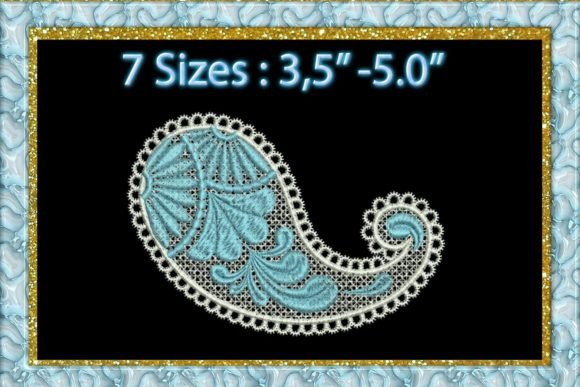
Paisley FSL: A Refined Free-Standing Lace for Boutique Apparel
First Impressions: Delicate, Dimensional, and Distinctly Premium
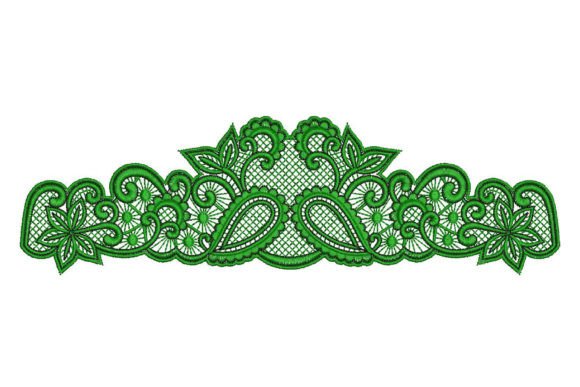
Opening the Paisley FSL embroidery file, I immediately sensed its intention: not just ornamentation, but elevation. This isn’t a busy filler motif—it’s a sculptural, airy paisley built for free-standing lace (FSL) execution. The visual personality leans elegant and timeless, with graceful curves, fine inner filigree, and balanced negative space that breathes on fabric. It feels inherently premium—not flashy or trendy, but quietly confident. That’s rare in digital embroidery files meant for apparel. For a boutique brand building recognition through refined details, Paisley FSL doesn’t shout; it lingers in memory.
Sweatshirt & Hoodie Integration: Where Texture Meets Grace
On neutral sweatshirts—think oatmeal, heather grey, or soft ivory—Paisley FSL transforms casual wear into something tactile and intentional. Its lace structure catches light differently than flat satin stitch, adding subtle dimension without bulk. For hoodie chest placement, I’d anchor it slightly off-center or use it as a quiet accent above the left pocket—its scale works beautifully at 3–3.5 inches wide. On oversized hoodies, a single Paisley FSL centered low on the back creates a sophisticated focal point that reads well in lifestyle product photos and printable mockups.
Sleeve accents? Yes—but thoughtfully. A small-scale version (if included in the multiple embroidery variations) works elegantly near the cuff on pastel hoodies or denim jackets. Avoid high-stretch zones like elbow bends unless you’ve tested stabilizer support thoroughly. On dark apparel—navy, charcoal, black—I recommend high-contrast thread colors (ivory, ecru, or even pale gold metallic) to ensure the lace structure remains legible and luminous.
Beyond Sweatshirts: Versatility Across Boutique Merchandise
Paisley FSL shines where handmade product integrity matters most. On t-shirts, it performs best on midweight cotton or linen blends—not ultra-thin jersey—paired with cutaway stabilizer to prevent puckering. For tote bags, especially structured canvas or medium-weight twill, it adds artisanal weight without stiffness. As a back design on cozy seasonal outfits (think cropped cardigans or fleece-lined loungewear), it signals attention to detail that resonates with discerning Etsy sellers and small shop customers.
In commercial embroidery production, consistency is non-negotiable—and Paisley FSL delivers predictable stitch density when digitized cleanly. That means fewer thread breaks, smoother satin edges, and reliable repeat performance across dozens of garments. For social media graphics and Etsy listings, its clean silhouette photographs crisply, enhancing visual consistency across your brand’s feed and storefront.
Design Judgment: Placement, Fabric, and Real-World Caution
This isn’t a “drop-and-stitch” design. Its beauty depends on intelligent execution. On ribbed fabric (like sweater knits or textured fleece), test first: the lace may sink unevenly between ribs unless stabilized aggressively. Curved surfaces—shoulder seams, curved hems—require careful hooping and possibly re-hooping mid-stitch to avoid distortion. Tiny lettering? Don’t add it directly into the Paisley FSL motif; its delicate structure can’t support dense text integration without compromising clarity.
For stretchy fabric—especially performance knits or lightweight French terry—use a combination of cutaway + tear-away stabilizer and reduce top tension slightly. Always inspect the stitch density in the file preview before loading: too much fill in tight curves risks stiffness, while too little risks fragility in wear. Confirm hoop size compatibility early—some FSL designs require larger hoops for optimal tension control.
Practical Embroidery Designer Notes
- Test on scrap fabric that matches your final garment’s weight, stretch, and finish—not just generic muslin.
- Review stabilizer choice carefully: cutaway is ideal for knits; heavy cutaway or mesh + topping works best for fleece or plush fabrics.
- Confirm thread color contrast: soft pastels recede; high-contrast combos (e.g., charcoal thread on cream lace) add modern edge.
- Verify hoop size and machine compatibility—especially if layering with other Creative Fabrica embroidery elements.
- Inspect stitch density visually in your embroidery software: look for smooth transitions in curves and consistent lace width.
- Test on similar garment fabric before full production—FSL behaves differently on dyed vs. undyed cotton, or brushed vs. smooth fleece.
- Compare placement options using printable mockups—small chest, sleeve placket, lower back—to see what aligns with your boutique brand voice.
- Check Creative Fabrica product details thoroughly: confirm licensing permits commercial embroidery use for finished apparel, and note any included file formats or size variations.
How Paisley FSL Elevates Brand Identity & Customer Trust
In a market saturated with generic logos and overused motifs, Paisley FSL helps boutique brands stand apart—not through novelty, but through considered craft. When customers feel the delicate texture of free-standing lace on their favorite hoodie, they’re not just buying apparel; they’re investing in intention. That perception boosts perceived value, supports higher price points, and deepens buyer trust. For Etsy sellers and creative entrepreneurs, it’s a subtle signal: *this was made with care, not mass-produced.* Visually, it reinforces consistency across collections—whether used solo on a sweatshirt or repeated as a border on tote bags and gift tags.
Final Thought: A Design That Earns Its Place
Paisley FSL isn’t background noise. It’s a statement piece disguised as subtlety—a digital embroidery file that asks for thoughtful application and rewards it with distinction. If you’re developing a small collection of custom apparel where every detail contributes to brand identity, this Creative Fabrica embroidery design earns its place in your library. Just remember: its elegance comes from precision, not convenience. Test, refine, and let the lace speak for itself.