Karma: A Thoughtful Seasonal Embroidery Design
First Impressions: Warm, Grounded, and Quietly Festive
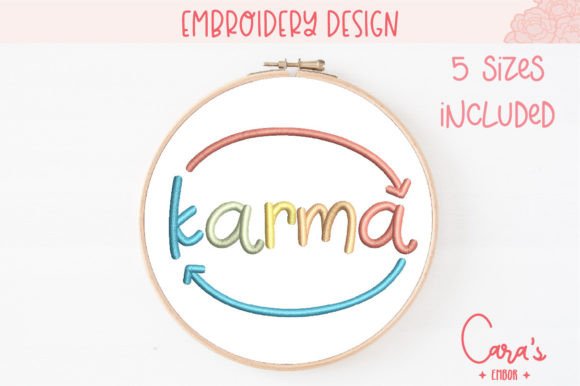
When Karma landed in my inbox for seasonal review, I paused—not because it’s flashy, but because it *settles*. It carries an Inspirational warmth without shouting. Think cozy winter mornings with steaming mugs, handwritten holiday cards, and quiet family moments—not glitter cannons or neon cheer. The line work is clean but not clinical; there’s gentle rhythm in the curves, subtle balance in the composition, and a softness that reads as both spiritual and sincere. It’s not overtly holiday-themed (no snowflakes or Santas), yet its tone fits seamlessly across Thanksgiving gratitude, solstice reflection, Christmas mindfulness, New Year intention, and even Valentine’s quiet devotion. That versatility is rare—and valuable.
Where Karma Shines on Real Holiday Products
Karma thrives where emotional resonance matters more than literal imagery. On sweatshirt embroidery, it anchors oversized pullovers with calm authority—ideal for “family matching” sets where cohesion matters more than uniformity. As a tote bag design, it elevates everyday errands into intentional acts, especially when paired with earthy thread colors and natural canvas. For home decor, Karma on kitchen towels or pillow covers adds quiet luxury to gifting—no loud slogans needed, just presence. It works beautifully on embroidered patches meant for jackets or backpacks, and on aprons for artisan bakers or candle makers launching limited-edition holiday collections.
Etsy sellers will find Karma performs exceptionally well in gift bundles: pair it with linen napkins, a ceramic mug, and a handwritten note for a “Mindful Holidays” set. Its simplicity allows strong visual recognition in social media previews and printable mockups—critical during high-traffic holiday shopping windows. Because it avoids trend-chasing, Karma supports brand consistency across seasons: use it in November, then again in March for spring renewal, reinforcing trust with repeat buyers who recognize its sincerity.
Smart Placement Matters—Here’s Where to Pause
Karma is elegant—but elegance requires respect for limits. Avoid placing it on items requiring extreme miniaturization: tiny ornaments under 2", curved cap fronts, or baby onesies with ultra-fine fabric texture. Its detail level doesn’t scale down cleanly. Likewise, steer clear of thick terry cloth towels unless you’ve tested stitch density and stabilizer layers thoroughly—dense stitching can pucker or sink into heavy pile. On dark fabric, test thread colors carefully: some metallics or pastels may lose definition, while charcoal grays or deep teals often deepen Karma’s grounded mood.
Stretchy garments (like ribbed knits or lightweight jersey) demand extra stabilizer attention—Karma’s balanced lines can distort if the base fabric shifts mid-stitch. And while it’s designed for reliability, never assume compatibility with every thread type: metallic thread may skip or break on finer elements, and rayon can flatten subtlety on dense fills. Always run a test stitch on scrap fabric matching your final product’s weight and weave.
Design Notes Every Embroidery Designer Should Keep Handy
- Test thread colors on both light and dark fabric—especially before batch production. Karma’s emotional tone shifts meaningfully with hue.
- Confirm hoop size early. If your machine’s smallest stable hoop is 4x4”, verify Karma fits comfortably within that boundary—including any border or spacing allowances.
- Match stabilizer to fabric texture: cutaway for knits, tear-away for stable wovens, and heavy-duty for towels or bags.
- Create realistic mockups—not just flat digital renders, but stitched samples on actual product types. See how Karma drapes on a pillow cover or absorbs into a linen tea towel.
- Review small details after stitching: check for stray trims, thread nests, or areas where tension pulled too tight—especially around fine connecting lines.
- Plan matching color palettes across your seasonal collection. Karma pairs effortlessly with muted clay, oatmeal, forest green, and slate blue—colors that photograph well and feel cohesive on Etsy listings.
- Confirm commercial licensing before selling finished products. This machine embroidery design is approved for resale—but always double-check terms before launching holiday inventory.
Why Karma Builds Trust During High-Stakes Shopping Seasons
Holiday shoppers don’t just buy products—they buy feeling, reliability, and meaning. Karma delivers all three without overpromising. Its restraint signals craftsmanship, not cost-cutting. When customers see Karma on a handmade gift or personalized gift, they sense intention—not algorithm-driven trend-chasing. That builds long-term loyalty, especially among mindful buyers who return year after year for quality over clutter.
For small shop owners, Karma reduces decision fatigue: one trusted digital embroidery file that works across categories—apparel, home, accessories—means faster product development and stronger visual storytelling. And because it’s been tested and reviewed to ensure top quality, you avoid the post-launch panic of inconsistent stitch-outs or customer complaints about distortion. That reliability translates directly to fewer returns, better reviews, and smoother craft fair displays where first impressions are everything.
A Final Note on Respecting the Design
The note in the product description isn’t boilerplate: “Resizing or editing of the design is not recommended and the quality of the designs cannot be guaranteed if you alter them in any way.” As a designer who’s spent years troubleshooting distorted lettering and collapsed fills, I endorse this fully. Karma’s balance—the weight of its lines, the air between elements, the rhythm of its fill—is calibrated. Stretch it, shrink it, or recolor threads without testing, and you risk losing what makes it special: its quiet confidence. Let Karma do what it was made to do—anchor seasonal products with grace, not gimmicks.
Use it thoughtfully. Test it thoroughly. And let its grounded energy elevate your holiday collection—not as decoration, but as invitation.